Is Your Warehouse Really Ready for Today’s Demand?


Most warehouses don’t fail because they are poorly managed. They fail because the system they were designed for no longer matches the reality they operate in.
Higher SKU complexity, unstable labor, and unpredictable demand patterns are reshaping how modern supply chains must operate. The real question is no longer “how big is your warehouse?”It is “how much complexity can your system actually handle?”
Here are five operational signals that your warehouse may already be under structural pressure.
1. When Inventory Growth Outpaces System Design
Many warehouses still scale by adding SKUs, not redesigning flow.
At first, this seems manageable. But over time, inventory growth begins to break the original logic of storage, picking, and replenishment. The result is not just congestion — it is loss of control over item positioning and flow efficiency.
This is where item-level automation becomes critical.
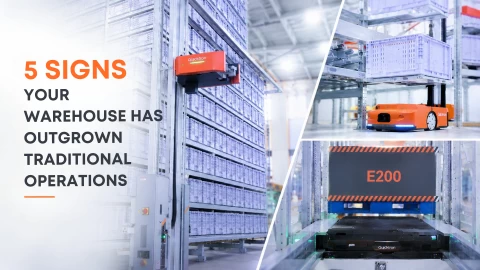
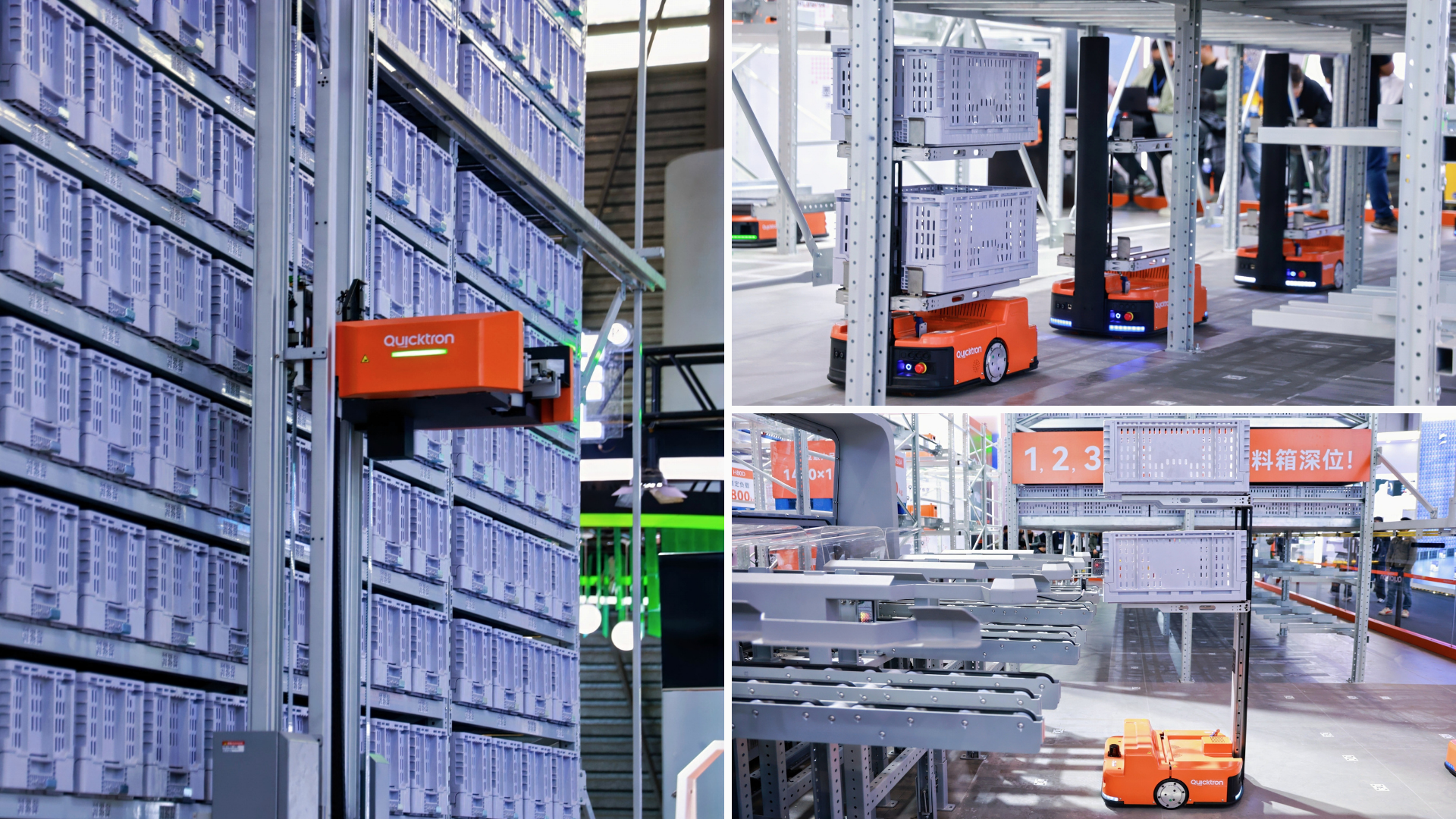
QuickBin Ultra helps stabilize high-SKU operations by decoupling inventory complexity from manual picking behavior, enabling structured goods-to-person workflows even in dense environments.
2. When Space Stops Behaving Like Capacity
Most warehouses are not actually full — they are inefficiently used.
The real limitation is not square meters, but how space is organized vertically and operationally. Once manual movement dominates, vertical space becomes difficult to utilize and horizontal aisles become overloaded.
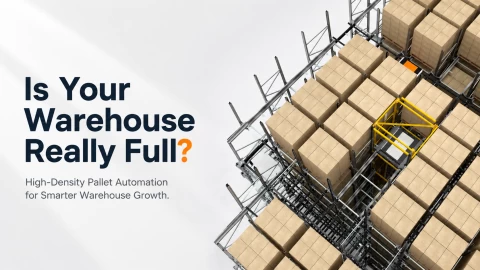
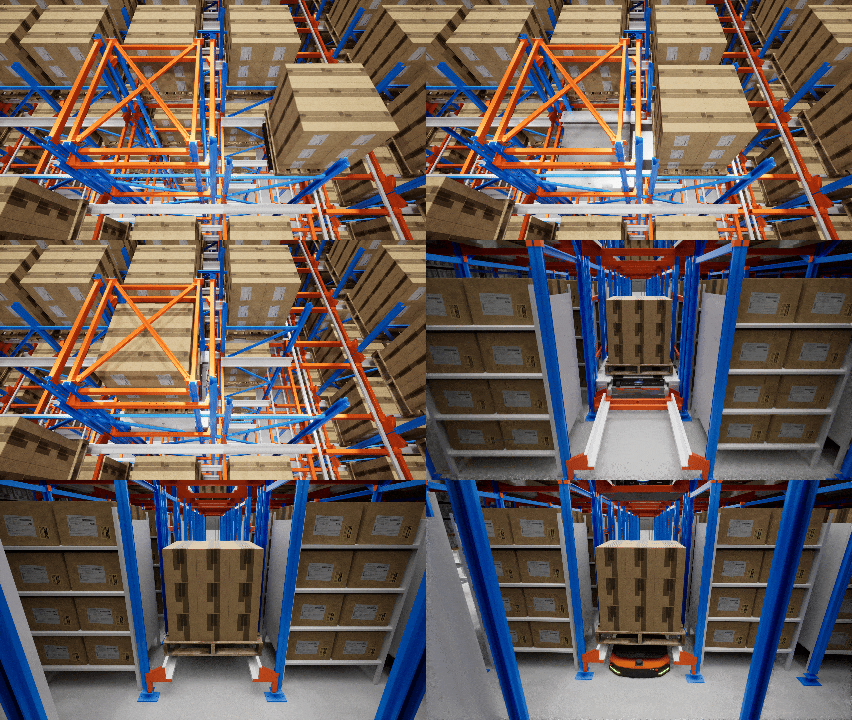
QuickCube addresses this by introducing high-density, automated pallet storage and retrieval, transforming static space into dynamic buffer capacity.
3. When Peak Demand Becomes a Stress Test Instead of a Growth Opportunity
Seasonal spikes should validate your system, not expose its limits.
But in many warehouses, peak periods trigger cascading issues: delayed picking, labor instability, and bottlenecks across inbound and outbound flows. Instead of scaling manually, automation allows capacity to scale systemically.
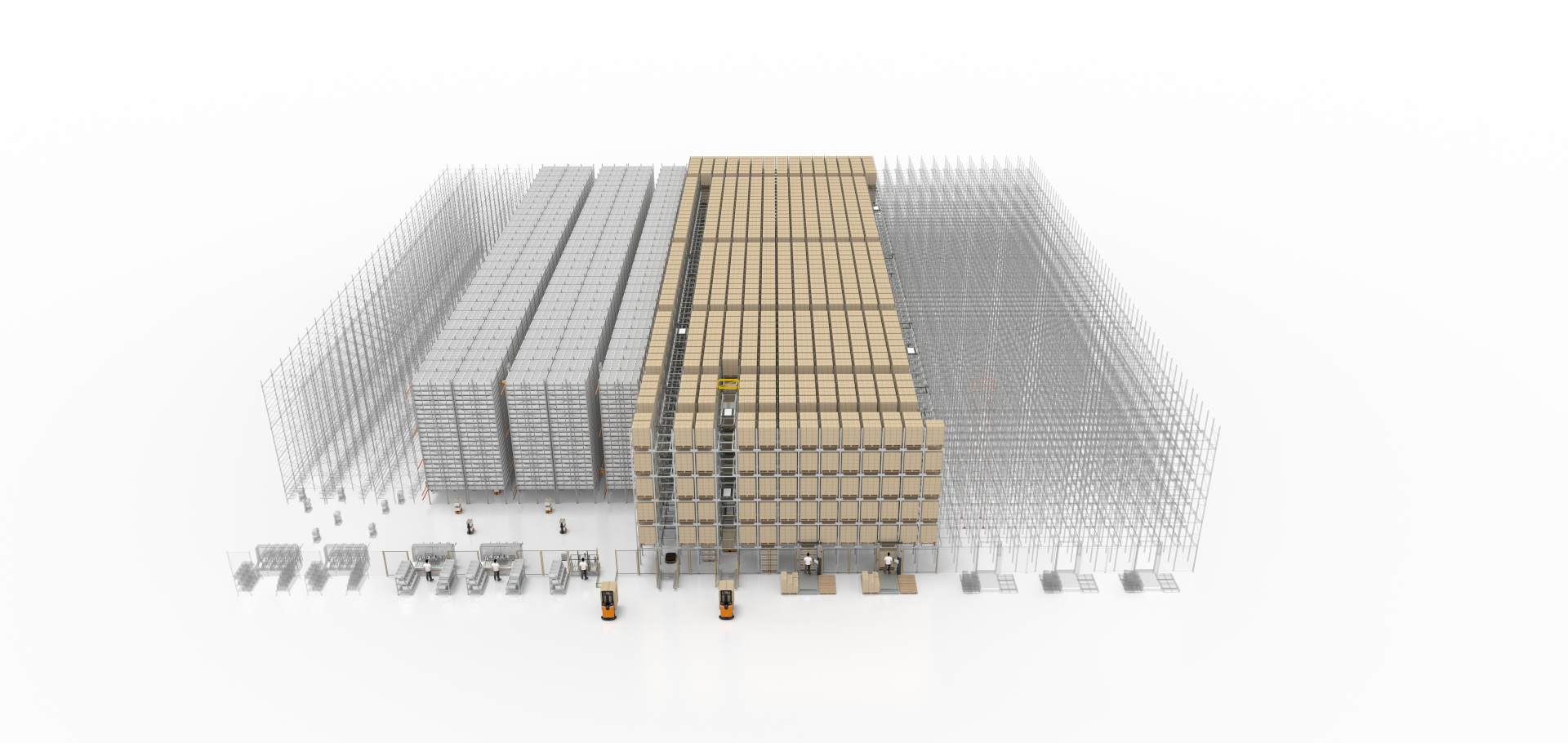
QuickBin Ultra manages order surges at the item level, while QuickCube ensures pallet flow remains stable under pressure.
4. When Labor Is No Longer a Variable You Can Control
Modern warehouse operations are increasingly constrained by workforce volatility.
The challenge is no longer just cost — it is predictability. Training time, turnover, and availability create operational gaps that manual systems cannot absorb.
Automation does not replace labor entirely. It restructures labor into more stable, supervision-based roles.
5. When Growth Starts Creating Friction Instead of Efficiency
In a well-designed system, growth should improve throughput.
But when infrastructure is not scalable, every increase in volume introduces disproportionate friction — more handling steps, more coordination, more dependency on manual decisions. At this stage, optimization is no longer enough. What is required is system redesign.
Quicktron’s modular automation approach allows warehouses to scale independently at both item and pallet levels without rebuilding core infrastructure.
Closing Thought
Most warehouses don’t need more space.
They need a system that can absorb complexity without breaking under it. The future of fulfillment is not defined by scale alone — but by how intelligently that scale is managed.
Explore how QuickBin Ultra and QuickCube can support your next stage of warehouse transformation.
Overseas Digital Marketing Specialist at Quicktron, specializing in global brand communication, digital marketing and content creation for intelligent robotics and logistics automation.