QuickCube Efficiency Upgrade: Multi-Robot Coordination Powered by RCS Reshapes Dense Pallet Storage

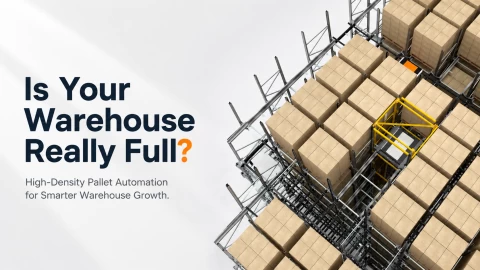
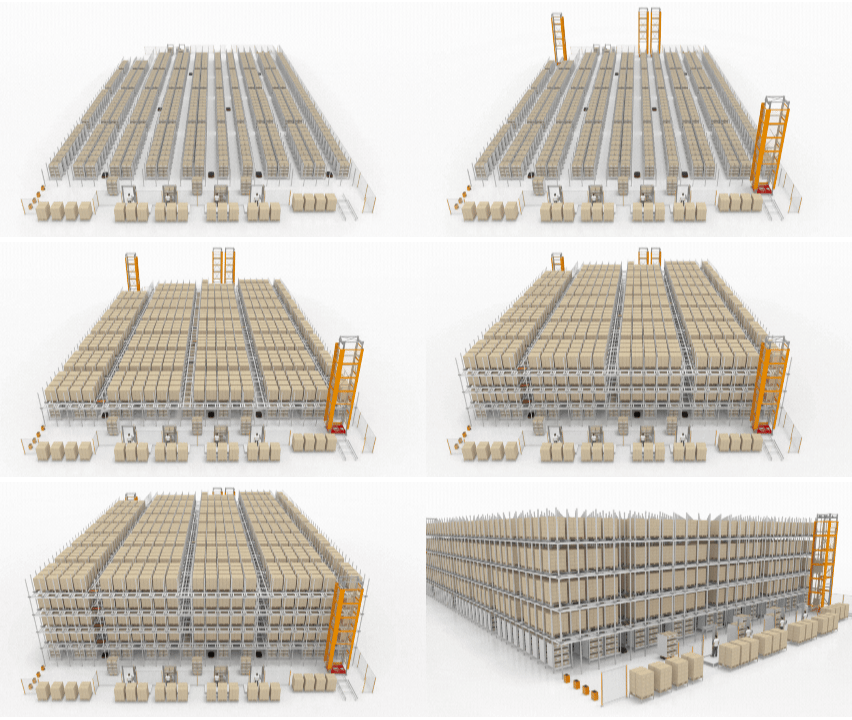
Traditional dense pallet storage systems have become a mainstream solution for industries such as manufacturing, e-commerce, and pharmaceuticals looking to maximize warehouse space utilization. However, conventional architectures still face common limitations, including weak device coordination, limited flexibility, and heavy reliance on conveyors or chain transfer systems for horizontal movement.

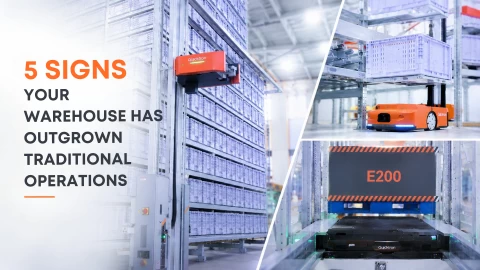
In traditional systems, elevators operate as isolated equipment disconnected from warehouse orchestration, making it difficult to adapt to dynamic operational demands. Quicktron’s latest evolution of the QuickCube dense pallet storage solution introduces an architecture-level upgrade by replacing third-party elevators with the self-developed E200 elevator. More importantly, the Quicktron RCS (Robot Control System) now enables coordinated operation between four-way shuttles, the E200 elevator, and its built-in transfer mechanism (FA), significantly improving both operational efficiency and system safety through AI-driven optimization.
From Conventional Elevators to Intelligent Cross-Layer Transfer AGVs
In traditional automated pallet warehouses, elevators mainly handle vertical transportation, while horizontal pallet transfer relies on external equipment such as chain conveyors and transfer lines. This separation between vertical and horizontal movement creates unavoidable response delays, higher system complexity, and multiple coordination points.
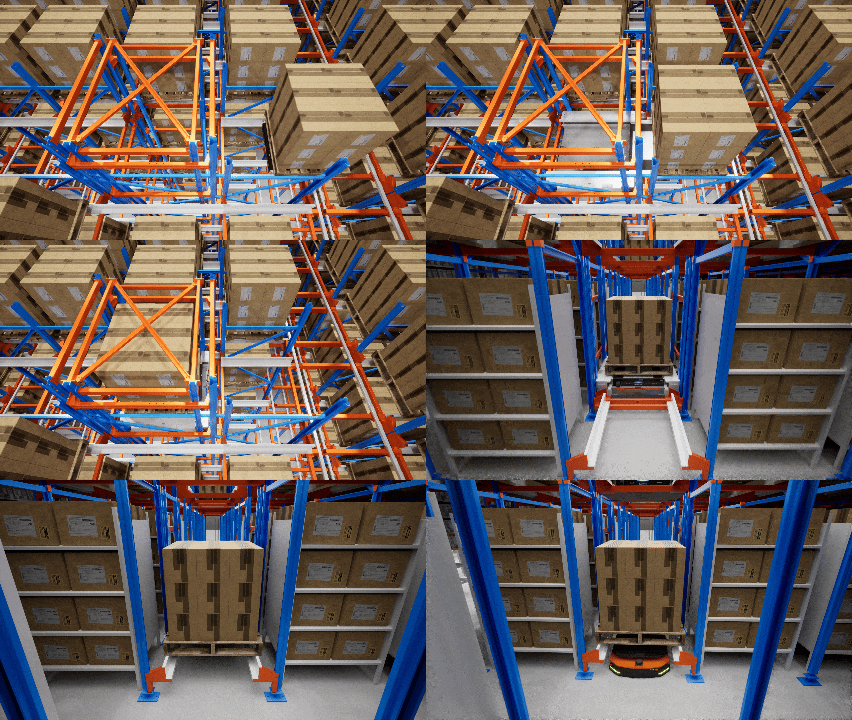
The E200 fundamentally changes this logic by becoming the system’s operational hub. Instead of relying on a “elevator + conveyor” combination, the new architecture consolidates all transfer functions into a single E200 unit, eliminating waiting time between devices while reducing footprint requirements.
The key innovation lies in integrating horizontal pallet transfer directly into the elevator itself. Equipped with a built-in FA transfer mechanism (two-way shuttle), the E200 independently handles pallet retrieval from buffer locations, vertical transportation, and pallet delivery, forming a seamless closed-loop workflow together with the C150 four-way shuttle.
Key Improvements
- Independent pallet transfer without waiting for chain conveyors
- Fully integrated transfer process between buffer locations and elevator
- Bi-directional transfer capability enabled by reversible motor design
- Flexible installation both inside and outside storage aisles
Architecture Comparison
| Dimension | Previous QuickCube | New QuickCube |
| Vertical Transport Equipment | Traditional elevator (vertical only) | E200 elevator (vertical + transfer integrated) |
| Inter-floor Transfer Method | Chain conveyors required on every level | No chain conveyors required |
| System Workflow | Multi-node coordination (C150 → conveyor → elevator → conveyor → C150) | Closed-loop coordination (C150 → E200 → C150) |
| Deployment Position | Fixed at aisle edge | Flexible installation inside or outside storage area |
| Storage Mode | Full-pallet storage and split-case picking | Full-pallet storage and split-case picking |
Space and Cost Optimization
Space Efficiency
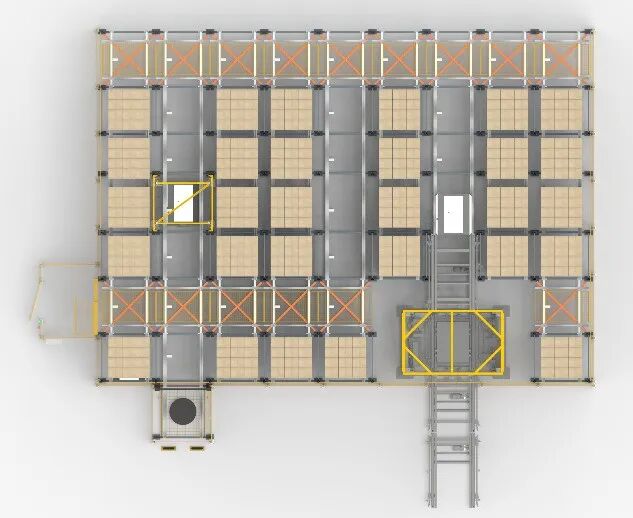
Thanks to its modular design and minimal footprint requirements, the E200 supports “minimally invasive” warehouse upgrades. In many cases, deployment only requires adjustment of a single storage position, minimizing disruption to existing building structures and operations.
Storage Space Comparison
| Comparison Item | Conventional Solution | New Solution |
| Elevator Footprint | 6–9 pallet positions | 1 pallet position |
| Chain Conveyor Requirement | Required on every floor | Not required |
| Space Reduction | — | 83–89% reduction |
Example Calculation: Six-Level Warehouse with Four Elevators
| Scenario | Conventional Solution | New Solution | Released Capacity |
| Conservative Estimate | 144 positions | 144 positions | 120 positions |
| Standard Estimate | 168 positions | 24 positions | 144 positions |
| Maximum Estimate | 216 positions | 24 positions | 192 positions |
Key Takeaways
- Space savings per elevator: 5–8 pallet positions
- Total savings with four elevators across six levels: 120–192 pallet positions
- Space release ratio: 83–89%
- Equivalent increase in storage capacity: 120–192 additional pallet positions
Cost Optimization
| Cost Category | Traditional Conveyor-Based Solution | E200 Integrated Solution |
| Equipment Procurement | Chain conveyor required | No additional conveyor equipment |
| Installation | Multiple technicians and PLC commissioning required | Modular deployment reduces labor by 50% |
| Transportation | Multiple devices increase logistics cost | Only E200 transport required |
Industry Applications
The QuickCube solution supports mixed storage of multiple pallet sizes and is compatible with major global pallet standards. With a maximum supported pallet size of 1400 × 1400 mm, the system fully covers standard pallet dimensions used across Europe, Japan, and the United States, making it ideal for multinational warehouse operations.
Cold Chain Logistics
QuickCube has been validated for stable operation in environments ranging from 45°C to -15°C. Its high-density storage capability is especially valuable for cold storage facilities where construction costs are extremely high. The system also supports both full-pallet storage and split-case picking operations.
E-Commerce and Retail
The “storage upstairs, picking downstairs” architecture is designed for high-turnover operations:
- Upper storage levels use four-way shuttles for dense storage
- Ground-level picking zones use underslung robots for goods-to-person operations

Manufacturing and 3PL
The E200’s flexible deployment capability allows installation close to production lines or operational areas without reserving dedicated elevator corridors. For facilities with multi-floor or cross-zone material movement requirements, the system provides highly efficient automated support for raw materials, semi-finished goods, and finished products.
Overseas Digital Marketing Specialist at Quicktron, specializing in global brand communication, digital marketing and content creation for intelligent robotics and logistics automation.